

The Next Generation of Working-Face Odor Control
For far too long, the waste industry has accepted equipment that has largely been overlooked, underdeveloped, wrongly applied, and unchanged for decades. Addressing that problem is something we have built our reputation on.
In many cases, we have watched vendors supply equipment they don't fully understand, or take equipment designed for an entirely different application and simply adapt it for use in a landfill. The result can be premature failures, excessive use of odor-mitigation chemicals, unnecessary maintenance, and costly downtime – all of which can contribute to NOVs and unwanted regulatory attention.
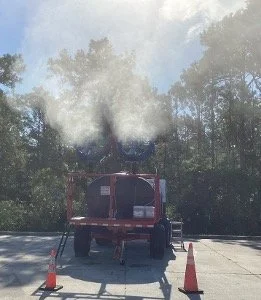
One of the best examples is the water wagon, sometimes called a fan trailer.
Regardless of what you call it, these machines can serve an important role at a landfill. They can provide targeted odor control, additional coverage for special waste streams, support at the working face, and dust and odor mitigation during drilling and other site activities.
The problem isn't the concept. The concept hasn't evolved enough.
Previous generations have been labor-intensive to operate, expensive to maintain, and far from optimized for day-to-day landfill use. We have even seen fans installed on landfill equipment carrying manufacturer'’ labels stating "For Indoor Use Only."
Think about that for a moment.
Equipment intended for indoor environments was being deployed into some of the harshest operating conditions imaginable – dust, moisture, corrosive environments, vibration, heat, cold, and constant movement.
Customers have been frustrated with these machines for years, yet very little changed. Meanwhile, the technology, automation, and logic incorporated into our homes, vehicles, and industrial equipment have advanced exponentially.
The traditional water wagon remained largely stagnant.
Until now.
Built Around What Operators Actually Asked For
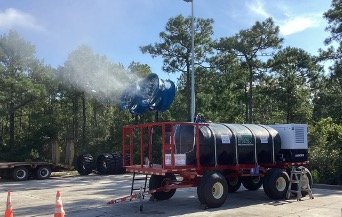
Customers told us they wanted remote operation.
They had previously been told it couldn't be done.
It can.
It simply requires understanding the equipment, the application, and how the machine actually operates in the field. That requires a specialized skill set and a willingness to engineer the entire system rather than simply assembling components.
Customers also told us about cracked tanks and structural failures.
When we evaluated previous chassis designs and considered the dynamic loading these machines experience, we saw opportunities to address those problems structurally. The result is a chassis designed to be nearly 40% stronger than previous options, incorporating our understanding of dynamic structures and the environment in which this equipment actually operates.
Operators also consistently complained about fuel consumption and how frequently these machines needed to be refueled.
Too often, equipment in this market isn't engineered by the company selling it. It is purchased from a subcontractor with instructions to essentially "build what you built before."
That approach doesn't drive innovation.
We took a different path.
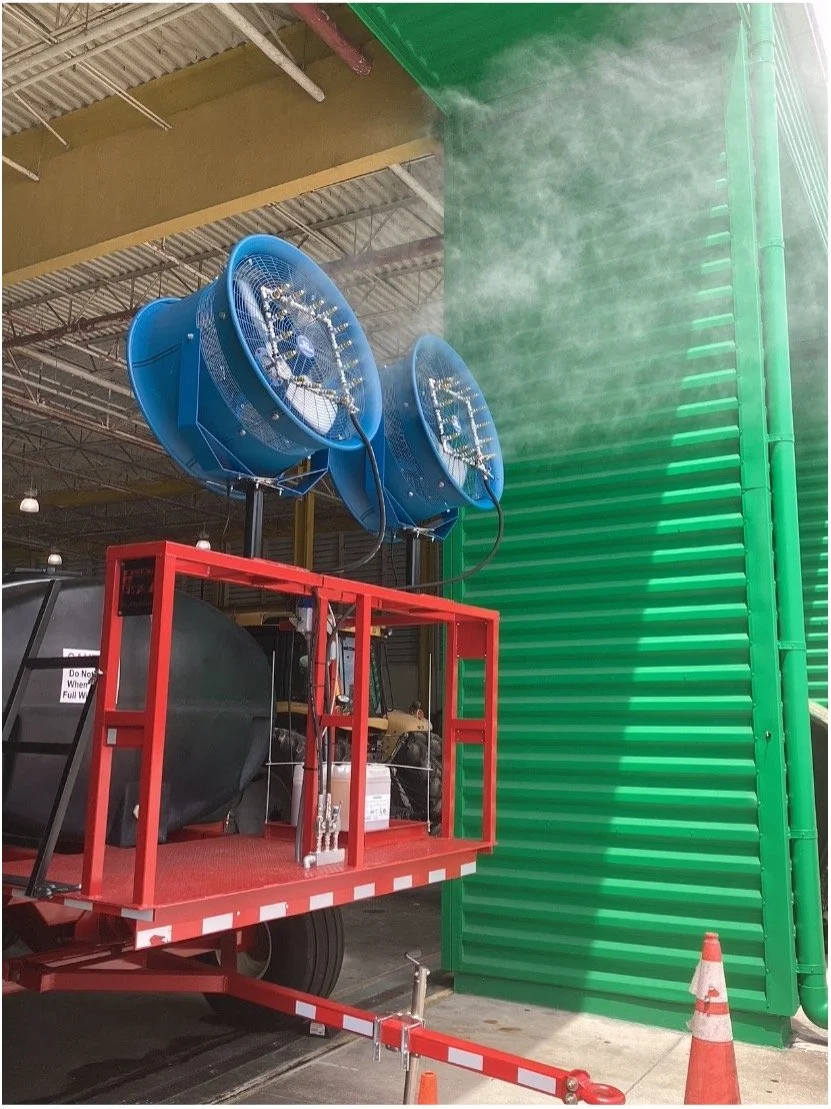
Through research, engineering, improved controls, logic integration, and better system planning, our newest-generation machine can operate for multiple days on a single tank of fuel, depending on operating conditions and utilization.
It's Not Just About Moving More Water
We understand that these machines need to move a significant amount of water. But simply pumping more water isn't the objective.
Effective odor control is.
That meant looking beyond the water system and evaluating how the odor-mitigation chemistry is introduced, mixed, suspended, and ultimately dispersed
Our proprietary system provides additional suspension time for the odor-mitigation chemical and water mixture before dispersion. The result is a more optimized application that can reduce chemical consumption by approximately 30%, depending on site conditions and application.
Those savings begin from the first day the machine enters service.
And when a machine operates day after day, month after month, those efficiencies matter.
We Built It Because We Understand It
We built this.
We designed it.
We manufacture it with purpose.
And, most importantly, we understand it.
That philosophy extends beyond this machine to every piece of equipment we offer. We don't want to simply sell equipment and move on to the next project. We want to understand why it works, why it fails, how operators actually use it, and what we can do to make the next generation safer, more reliable, more efficient, and easier to operate.
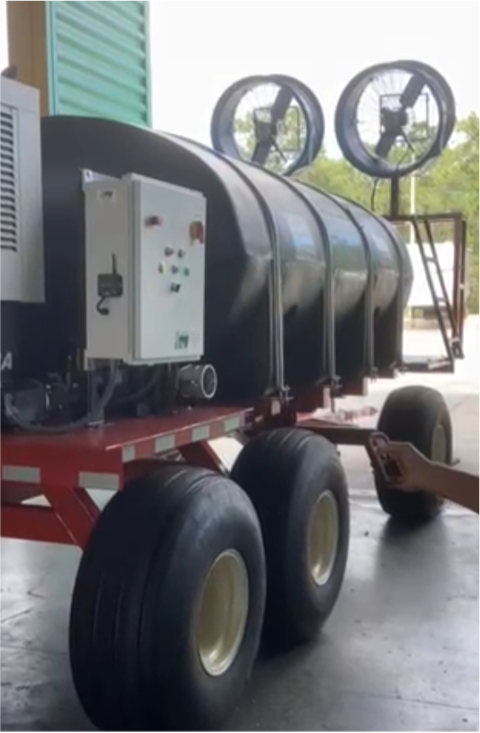
Ask us about the details.
Ask us why the chassis was designed the way it was. Ask us about the controls, the remote operation, the pumps, the fans, the chemical delivery system, fuel consumption, maintenance, or why we selected a particular component.
We are happy to get into the nitty-gritty.
Because when you understand the equipment you design, manufacture, sell, and support, those questions aren't difficult.
They're the reason you built it that way in the first place.
For more information, reach out to Resources By EWS. Our phones are on, our Team is available, and we understand that this industry doesn't have the luxury of waiting when equipment is needed.
We know what the industry requires because we work in it every day – and we built this machine around the areas where we knew there was room to do better.
